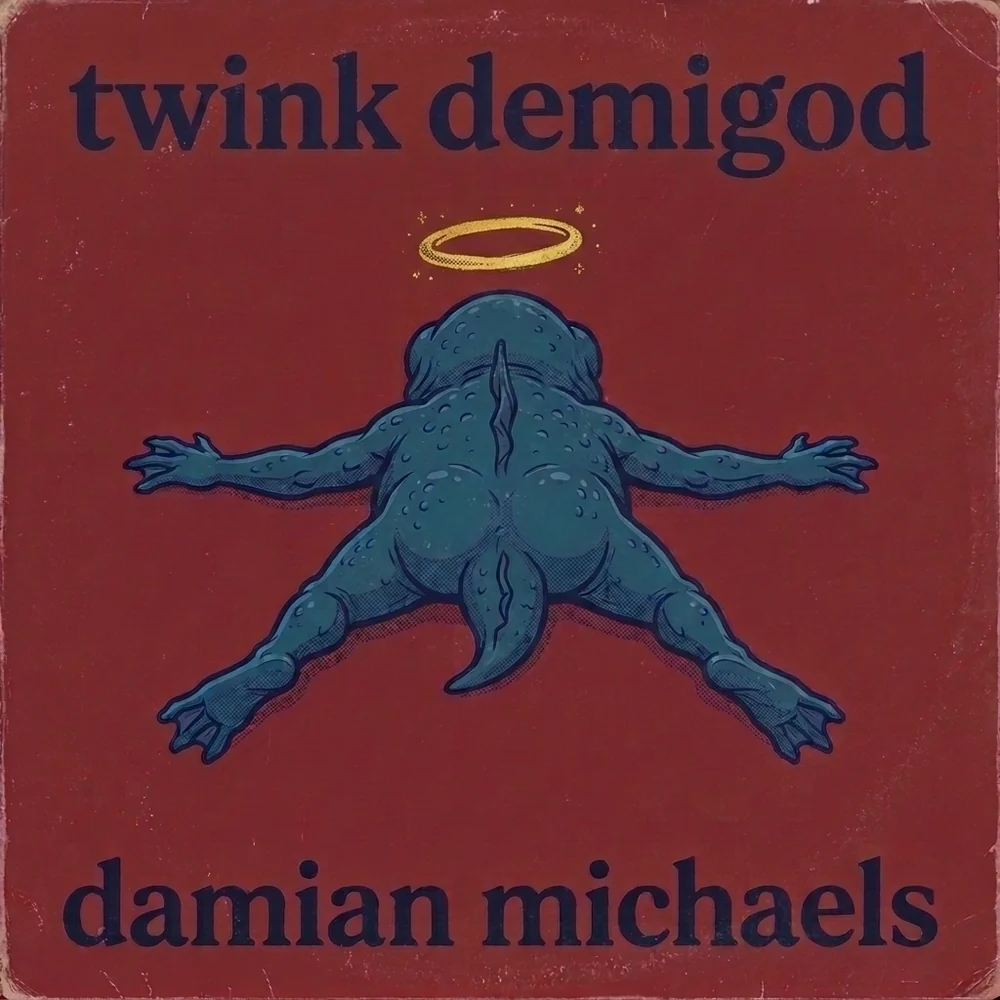
young. dumb. leviathan.
“twink demigod” does not ask the listener to decide whether its central character is a god. It is much more interested in what happens when somebody behaves like one. A driftwood prophet, a starfish on the couch, and a face card powerful enough to establish a minor religion all appear to be part of the same cosmology.
The humour is structural, not an interruption. The language keeps reaching for scripture and sea monsters, then returning to the extremely ordinary business of being attractive, reckless, and a little too impressed with yourself. It is possible to be an idol and still leave your stuff everywhere.
There is something slightly fragile about a demigod, too. The word promises divinity but admits it is incomplete. Confidence might be real, an act, or both. And being very good at recognizing someone else’s vulnerability does not necessarily mean knowing how to care for it.
Most importantly, the song gets to enjoy its own ridiculousness. Sometimes a beautiful disaster is just having an excellent day.
What’s the significance of “tide goes out, tide comes in”?
It’s a very reassuring way to describe something that keeps happening whether you want it to or not.
Is there a darker meaning behind “says the right thing, but his hands misbehave”?
Words are incredibly convenient. They let you describe yourself without having to demonstrate anything. Hands tend to be less interested in maintaining the narrative.
What’s the meaning behind “the empath for sad boys”?
Some people are very good at recognizing vulnerability. That doesn’t necessarily mean they’re good at caring for it. The distinction can take a while to become obvious.
Is “Leviathan twink demigod” supposed to be romantic or insulting?
Yes. I suppose it depends how highly you think of Leviathan.
What exactly is a “kink eclipse”?
I felt like calling him a god would be giving him too much credit.