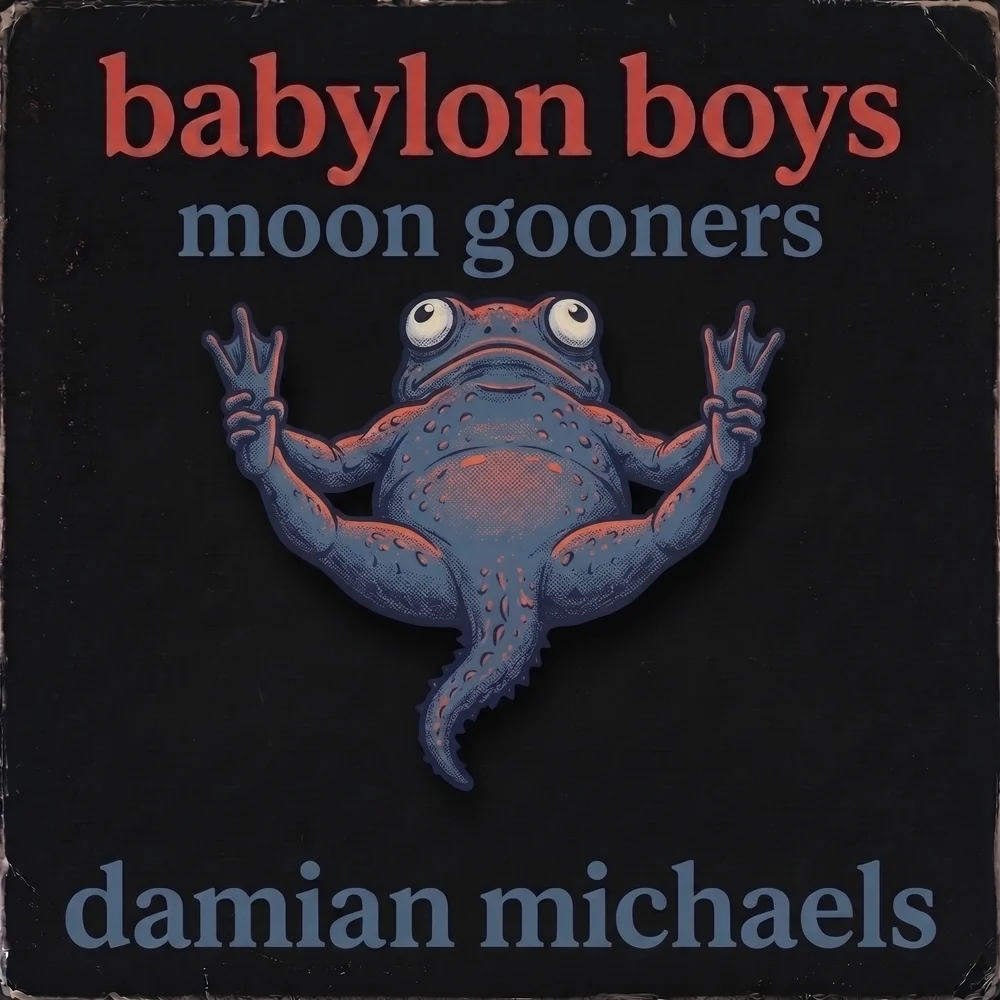
look what heaven did.
In “biblically inaccurate boys,” scripture, NASA, and the internet are presented with the same impossible creature. None of them seems particularly qualified to explain him.
Six-winged seraphim, the Whore of Babylon, seven heads and ten horns all turn up in a bedroom where the end of days appears to be having a very unserious evening. Ancient prophecy collides with algorithms, overheated internet slang, and questions about what, exactly, the other four wings are for. The song delivers its absurdities as though these are perfectly normal things to ask about someone sleeping beside you.
Underneath the jokes is a less stable idea of what makes a creature holy or monstrous. Wings are not proof of innocence. Beauty does not guarantee kindness. A halo might be a symbol of something sacred, or simply an accessory its owner can leave by the bed. The song keeps borrowing the authority of religion while questioning what that authority actually protects.
The central figure changes depending on when he is observed. He can appear unfinished, full of extraordinary possibility, or already transformed into the kind of thing people warn one another about. A prompt is an especially uneasy way to describe a person: something written before the outcome exists, waiting for somebody else's instructions. The song leaves open who has been doing the writing, and who gets blamed when the result displeases them.
Even the most extravagant catastrophe might be a way of describing something painfully ordinary. The language of heaven and apocalypse makes an experience sound enormous enough to account for its consequences. It may also be easier to name a monster than to admit that an ordinary person could have done something that changed the shape of a life.
Then the spectacle contracts. A halo is removed. The room is still there. Heaven, supposedly equipped with a thousand eyes, appears not to have seen the person beneath them. The difference between being watched, understood and protected becomes the song's quietest and perhaps most troubling uncertainty.
Its final return to the opening imagery doesn't necessarily bring us back to the same moment. Six wings, seven heads, ten horns: the description is unchanged, but the listener may no longer be sure what kind of creature it was describing, or whose version of him they were hearing.
Maybe he was never biblically inaccurate. Maybe everybody just kept reading him wrong.
why does the song keep returning to the six wings?
“There’s an awful lot of responsibility to place on a creature just because somebody decided he could fly.”
what does “a vision of heaven with terrible permissions” mean?
“The frightening possibility isn’t necessarily that something broke the rules. It might have been operating perfectly well within the permissions it was given.”
is “biblically inaccurate” an insult?
“Maybe the boy was never inaccurate. Maybe everybody just kept reading him wrong.”